














What Tennis Strings Are Made Of – Strings Explained
Tennis strings come in a few different constructions and materials, each changing how your racquet feels and performs. Below we break down the main string types, how they affect power, control, comfort, and durability, plus tension basics and when to restring.
Why Strings Are So Important
Think of the string as the engine of your racquet — it’s the only part that actually contacts the ball. Choosing the right string can unlock more comfort, spin, control, or power. We’ve made it easy below.
String Construction
Most tennis strings fall into four categories: Synthetic Gut, Multifilament, Natural Gut, and Polyester.
| 1) Synthetic Gut | |
|---|---|
| What it is | Typically nylon (solid core with wraps). Great value and balanced playability. |
| Upsides | • Economically priced • Good all-round performance for casual/recreational play |
| Downsides | • Not exceptional in any single category • Average feel vs premium options |
| 2) Multifilament | |
|---|---|
| What it is | Hundreds of microfibres bonded/wrapped to mimic natural gut. Arm-friendly. |
| Upsides | • Excellent playability & comfort • Good tension maintenance • Wide range of price points • Closest feel to natural gut |
| Downsides | • Less control-oriented than poly • Lower durability for hard hitters • Some models can feel “mushy” |
| 3) Natural Gut | |
|---|---|
| What it is | Made from natural fibres (cow serosa). Gold standard for feel and tension stability. |
| Upsides | • Best overall playability & feel • Outstanding tension maintenance • Very arm-friendly • Stays playable even at higher tensions |
| Downsides | • Most expensive string type |
| 4) Polyester (Co-Poly) | |
|---|---|
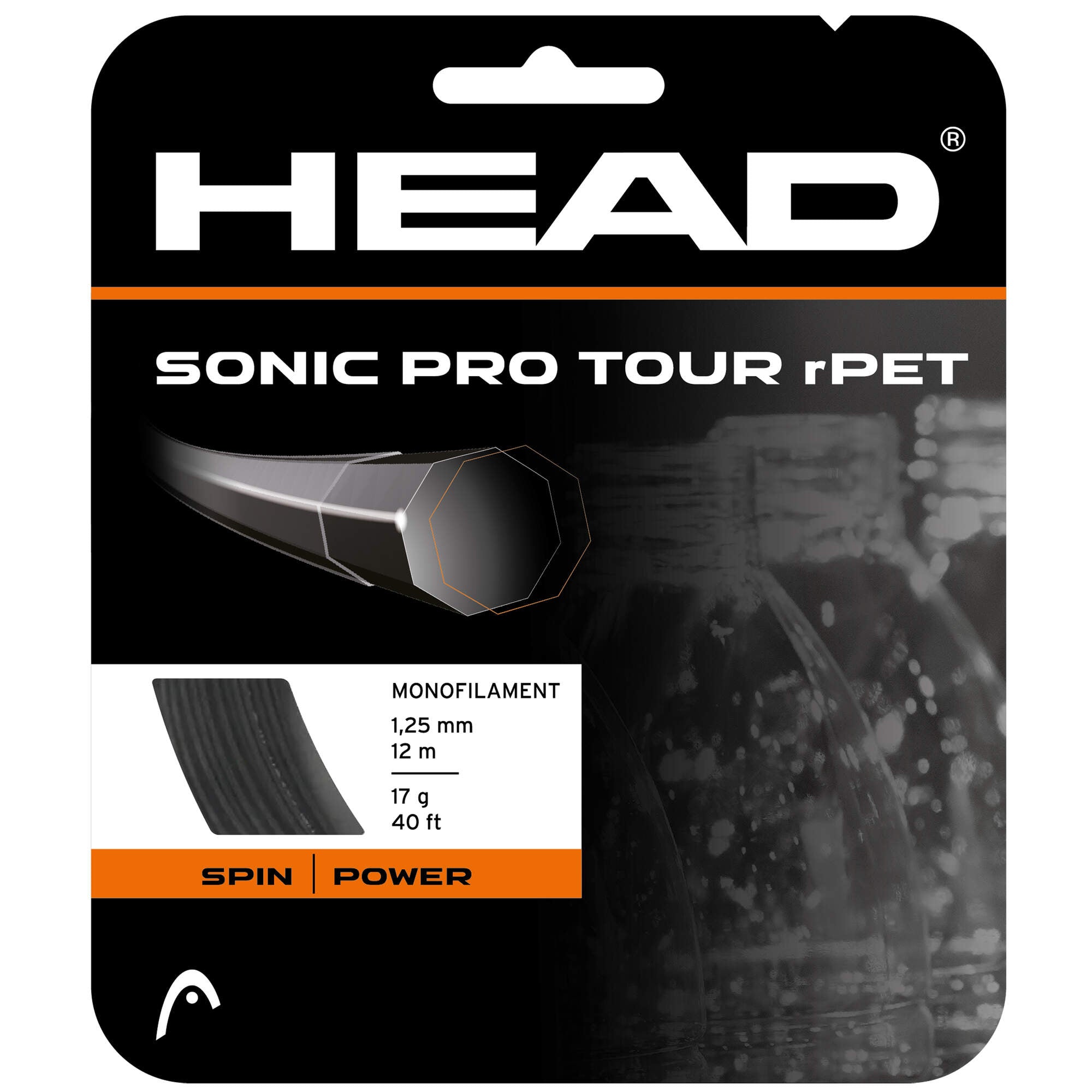
| What it is | Stiffer monofilament built for control and spin; popular with intermediate/advanced players. |
| Upsides | • High control & spin potential • Very durable • Tour-proven performance |
| Downsides | • Lower power • Harsher on the arm • Faster tension loss (restring more often) |
String Gauge (Thickness)
Gauge = thickness. Higher gauge numbers mean thinner strings. Because brands label gauges differently (e.g., 16 vs 16L), check the millimetre size for accuracy (e.g., 1.25 mm vs 1.30 mm).
Quick guide:
• Thinner (higher gauge) → more power & spin, less durability
• Thicker (lower gauge) → more control & durability, less feel
• Thinner (higher gauge) → more power & spin, less durability
• Thicker (lower gauge) → more control & durability, less feel
String Tension Basics
Tension = how tightly your racquet is strung. Most racquets list a recommended range (often 50–60 lbs). Higher tension gives more control (less power); lower tension gives more power (less control).
Starter tip: Begin in the middle of your racquet’s range. Need more power next time? Drop 2–3 lbs. Going too tight above the max can risk frame warranty.
When to Restring
Don’t wait until it breaks. As a rule of thumb: restring as many times per year as you play per week. Polyester users should restring more often due to faster tension loss. If strings feel dead or “bagged out,” they’ve lost tension and playability (power, control, feel).
Find Your Perfect String at 2G Sports
After comfort, spin, control or durability? We stock leading brands like Yonex, HEAD, Wilson, and Babolat. Our stringers can help you match the right type, gauge, and tension to your style.
Need advice? Chat with us or call 0435 160 032. Visit us at 538–540 Whitehorse Rd, Mitcham VIC 3132 (Open 7 days, 10am–6pm).
Visit us
Open 7 Days
10AM - 6PM
- Choosing a selection results in a full page refresh.
