















Badminton Strings Explained – Find the Right String for Your Game
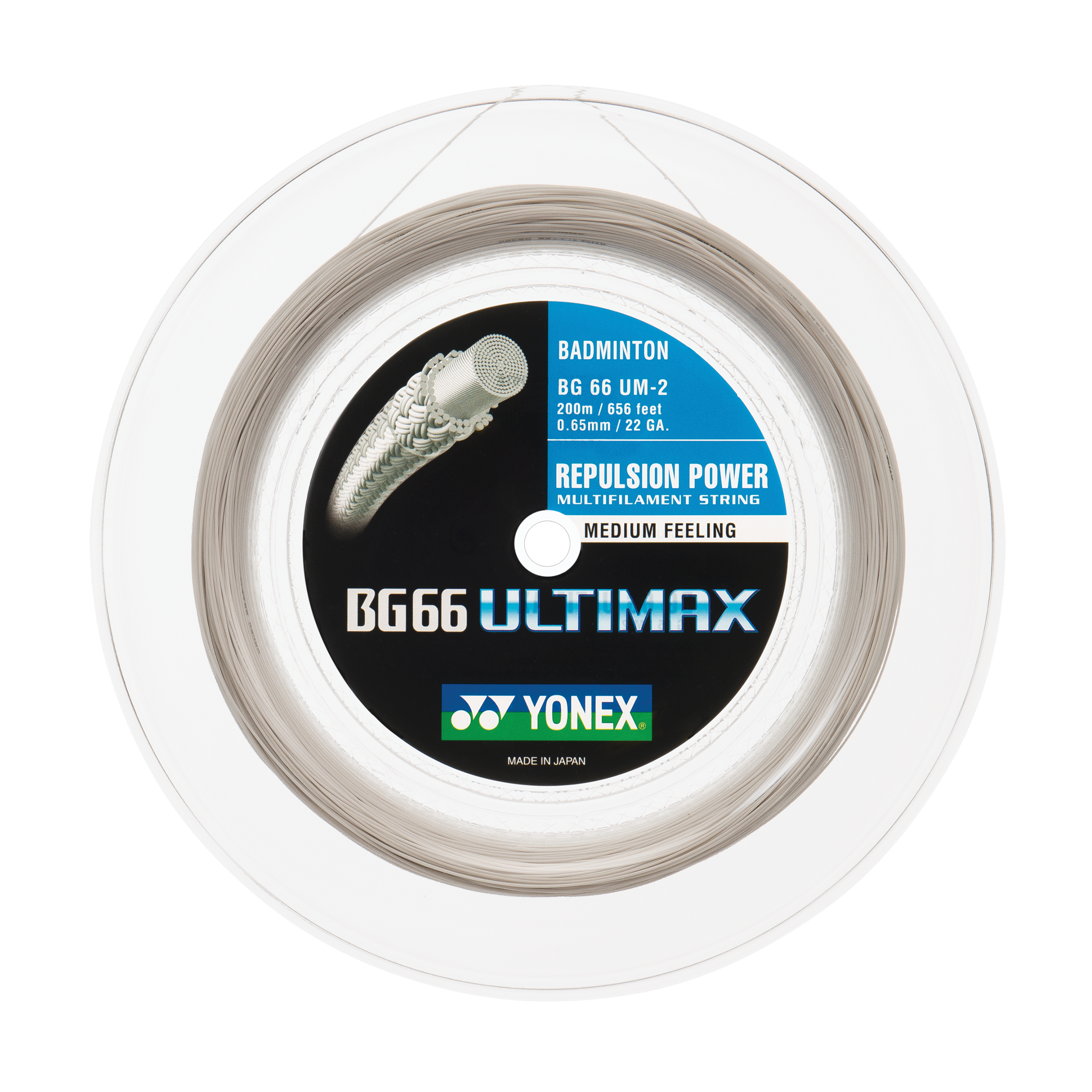
Choosing the right badminton string makes a big difference in your control, repulsion power, and feel. We’ll explain the types of strings, how thickness and tension affect performance, and when it’s time to restring.
Why Strings Matter in Badminton
Your racquet frame gives you structure — but the string is what makes contact with the shuttle. Picking the right string can mean faster smashes, better control, and more comfort. Think of it like choosing the right tires for a car — it changes the way everything feels on court.
String Construction & Types
Most badminton strings are made from nylon multifilament cores with different coatings or surface treatments. Here are the main categories and what they offer.
| 1) Multifilament Nylon Strings | |
|---|---|
| What it is | The most common string type — hundreds of fine nylon fibers twisted together for elasticity and repulsion. |
| Upsides | • Great repulsion power • Softer feel and good shock absorption • Comfortable on the arm • Balanced playability for all levels |
| Downsides | • Average durability • Loses tension faster than harder strings |
| 2) High-Repulsion (Thin Gauge) Strings | |
|---|---|
| What it is | Thinner strings (0.61–0.66 mm) designed to maximize shuttle speed and feel. Used by offensive or doubles players who want a crisp, lively response. |
| Upsides | • Explosive repulsion • Better feel and sound • Great for fast rallies |
| Downsides | • Lower durability • Tension drops faster • Not ideal for heavy hitters |
| 3) Durability Strings (Thicker Gauge) | |
|---|---|
| What it is | Strings around 0.68–0.70 mm or thicker, built to last longer and withstand heavy-hitting singles play. |
| Upsides | • High durability • Good control and accuracy • Consistent tension retention |
| Downsides | • Less repulsion • Slightly harder feel • Not as quick for doubles exchanges |
| 4) Textured or Rough Surface Strings | |
|---|---|
| What it is | Strings with a rough or coated surface that helps grip the shuttle for extra control and spin effect. |
| Upsides | • Improved control on slices and spins • Better shuttle hold • Solid feel |
| Downsides | • Slightly reduced repulsion • Can wear faster with frequent slicing |
String Gauge (Thickness)
Gauge is the diameter of the string — usually between 0.61 mm and 0.70 mm. The thinner the string, the more repulsion and feel; the thicker the string, the more control and durability.
Quick guide:
• 0.61–0.66 mm → more repulsion & sound (for offensive/doubles play)
• 0.67–0.70 mm → more durability & control (for singles or heavy hitters)
• 0.61–0.66 mm → more repulsion & sound (for offensive/doubles play)
• 0.67–0.70 mm → more durability & control (for singles or heavy hitters)
String Tension Basics
Tension is how tightly the racquet is strung. Most badminton racquets recommend 18–30 lbs depending on the model. Lower tension adds power and a softer feel; higher tension gives more control and feedback.
Tip: Beginners often play best around 20–23 lbs, intermediates 24–26 lbs, and advanced players 27–30 lbs. Stringing above manufacturer limits can void your warranty.
When to Restring
Strings lose tension over time — even if they haven’t broken. A simple rule: restring as many times per year as you play per week. Players who use high-tension or thin strings should restring more often to maintain consistent performance.
Find Your Perfect Badminton String at 2G Sports
From Yonex BG series to Victor VBS and Li-Ning No. 1, we stock top models for every style — power, control, and durability.
Need help choosing? Chat with our team or visit us in-store.
📍 538–540 Whitehorse Rd, Mitcham VIC 3132 📞 0435 160 032 Open 7 Days (10 am – 6 pm)
📍 538–540 Whitehorse Rd, Mitcham VIC 3132 📞 0435 160 032 Open 7 Days (10 am – 6 pm)
Visit us
Open 7 Days
10AM - 6PM
- Choosing a selection results in a full page refresh.
